Longitudinal Care
.png)
Overview
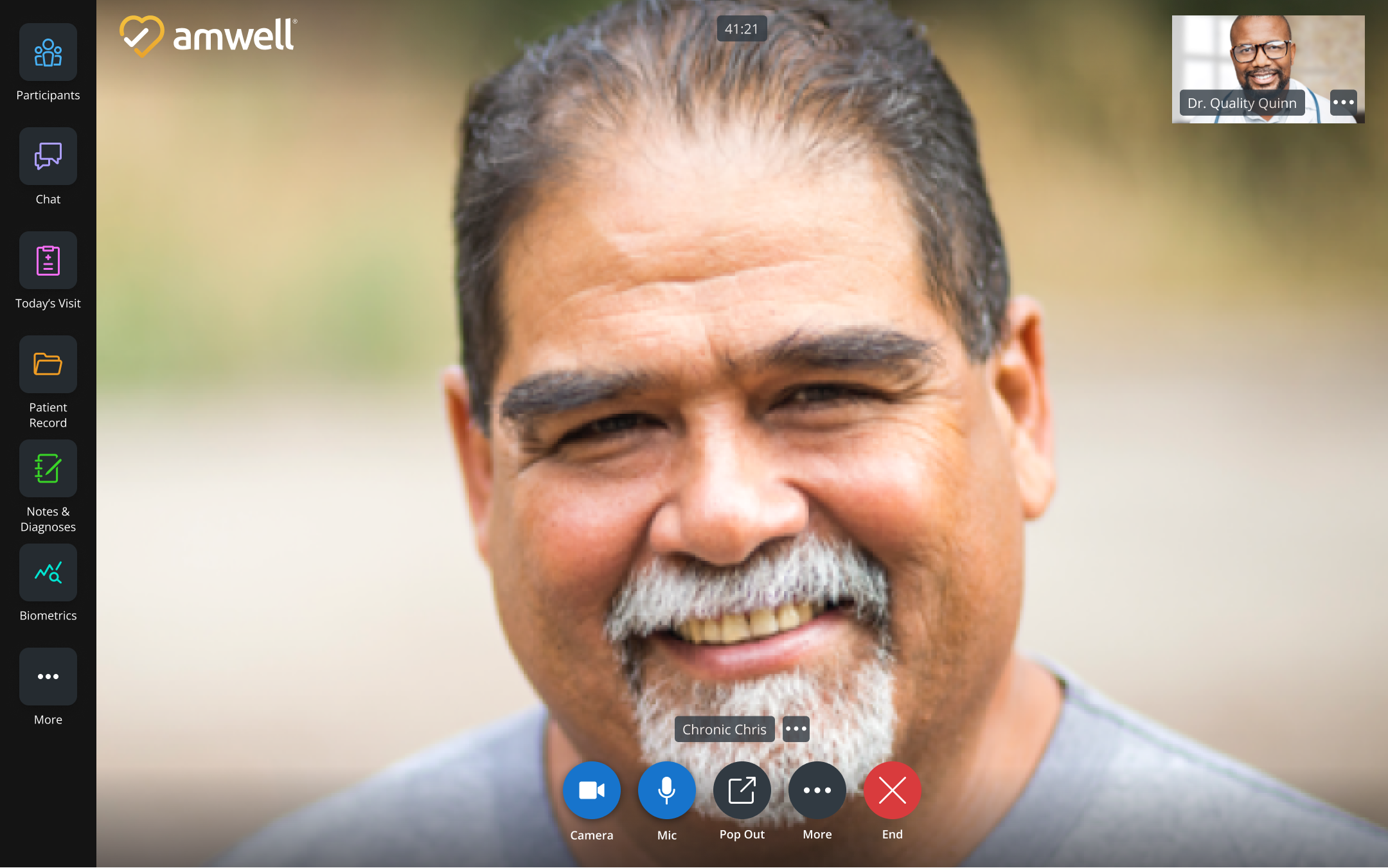
I led the end to end redesign of Amwell’s visit experience to support longitudinal care for chronic condition management.
The existing experience surfaced only point in time data, limiting providers’ ability to understand trends, assess treatment effectiveness, or make confident decisions for patients enrolled in ongoing care programs.
This work transformed the visit from a single encounter interface into a longitudinal decision support system, enabling providers to interpret patient health over time without disrupting live clinical workflows.
My Role & Leadership
I served as the design lead and owner for this initiative, responsible for both strategic direction and execution. My responsibilities included:
- Framing the problem space in partnership with Product and Clinical stakeholders
- Defining the longitudinal care experience vision and success criteria
- Leading cross functional design reviews and aligning teams around a shared mental model
- Designing scalable interaction patterns and data visualization systems
- Balancing clinical complexity with usability and cognitive load constraints
- Partnering closely with Engineering to ensure feasibility and extensibility
I operated with high autonomy, making tradeoffs across scope, timeline, and experience quality while ensuring alignment with broader platform strategy.
Problem
Amwell’s visit experience allowed Providers to view current lab values but failed to support longitudinal reasoning, a critical requirement for managing chronic conditions.
This resulted in:
- Hindered chronic condition management.
- Incomplete patient health profiles.
- Reduced efficiency in care delivery.
- Lower Provider and Patient satisfaction.
Problem Statement
How might we enable providers to quickly interpret longitudinal patient health data during a live visit so they can confidently assess progress and take action without disrupting clinical flow?
Approach
I approached this work as a systems design problem rather than a feature level redesign. The focus was on enabling longitudinal reasoning by prioritizing trends, deltas, and patterns over isolated values.
Complexity was intentionally managed through progressive disclosure, surfacing high signal insights first while allowing deeper exploration when needed. Longitudinal insights were embedded directly into the visit workflow to minimize context switching and support real time decision making. The solution was designed to scale by default, ensuring it could accommodate new metrics, devices, and conditions without requiring fundamental redesign.
Solution
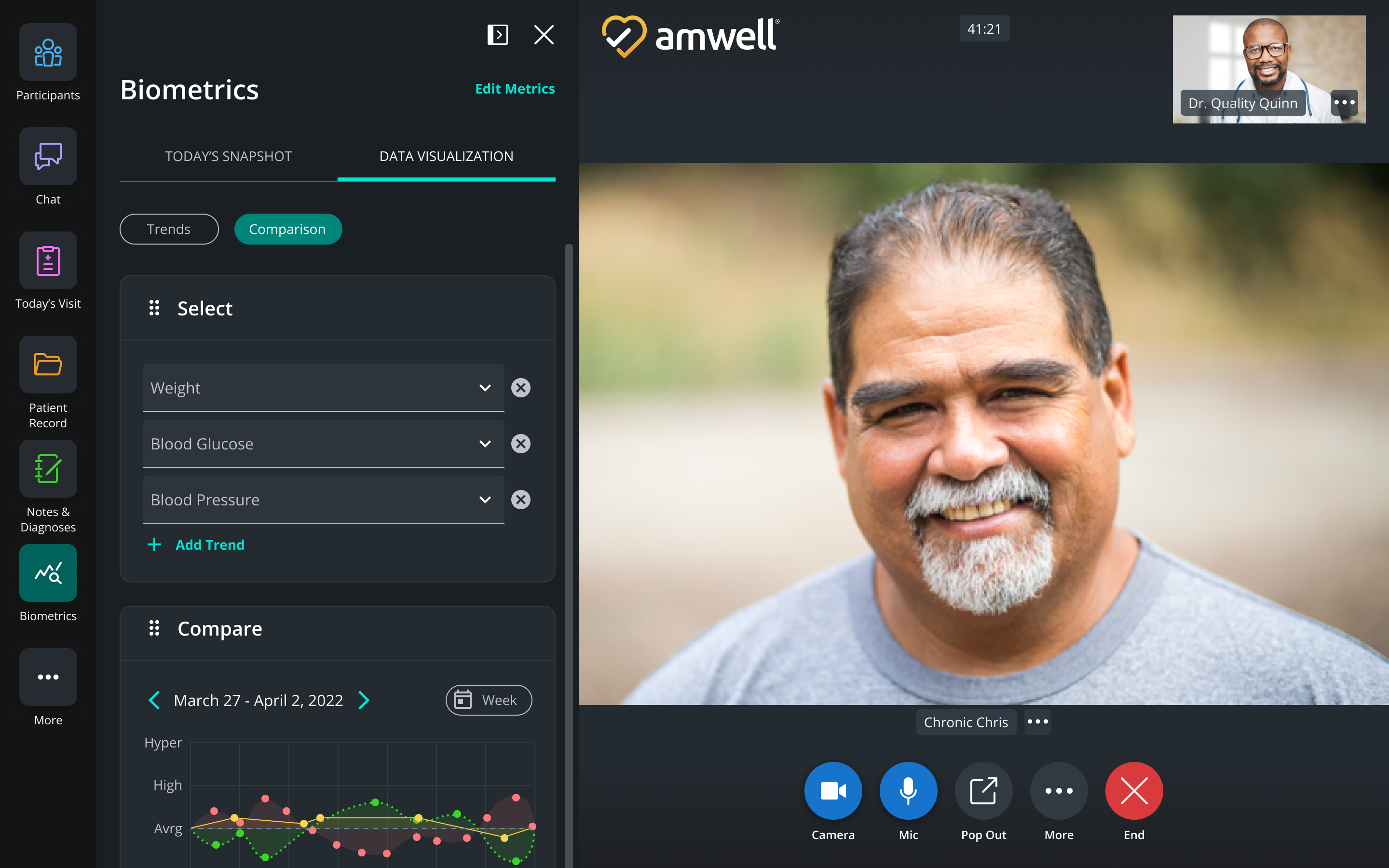
The redesigned experience enables Providers to interpret patient health longitudinally within the visit by unifying time based biometric data into a single, insight driven view. Providers can compare trends across metrics such as blood glucose, blood pressure, weight, activity, and diet, with configurable time ranges and integrated data from wearables and third party health apps. Visual hierarchy, thresholds, and cues surface risk, stability, and improvement at a glance, supporting faster clinical judgment without disrupting workflow.
The redesign resulted in a 17 percent increase in Provider satisfaction, faster and more confident in visit decision making, and more complete longitudinal patient narratives. It also established a reusable foundation for future longitudinal care initiatives, aligning individual visits more closely with long term treatment plans across the platform. Allow the Provider to view datasets while in visit, and track data over time by comparing trends and different biometrics pulled in from Biowearables and integrated health apps.
.png)